

Self-care is an important yet often overlooked element in maintaining long-term mental and physical health. It involves anything one does for self-improvement, such as setting aside time for physical self-care rituals like mindfulness practices or yoga.
This article explains simple and small steps to improve your personal life and well-being, like better sleep habits and a balanced diet. By attending to your self-care needs, you can ensure that your physical health benefits from improved heart health, reduced stress levels, adequate rest, and more.
Likewise, self-care can benefit your mental health too by enabling us to create a self-care plan that boosts your self-esteem and self-love.
You can get effective mental health therapy from Indiana Center for Recovery. Our professional counselors can guide you on ways to care for yourself.
Taking care of your mental and physical health is essential to overall wellness.
Get more information about self-care techniques from professional counselors at one of our facilities or healthcare partners.
Self-care practices are simply things you do to improve your health and overcome your emotions and fear.
They can vary greatly, but some common practices include exercise, relaxation techniques, and eating a nutritious diet. There are plenty of benefits to self-care, both short-term and long-term.
Discover what needs you have that aren’t being met. Some people need to take care of themselves more because they have a lot of energy and don’t want to let that go to waste.
Others may need to take care of themselves because they experience symptoms from stress or depression that affect their physical health.
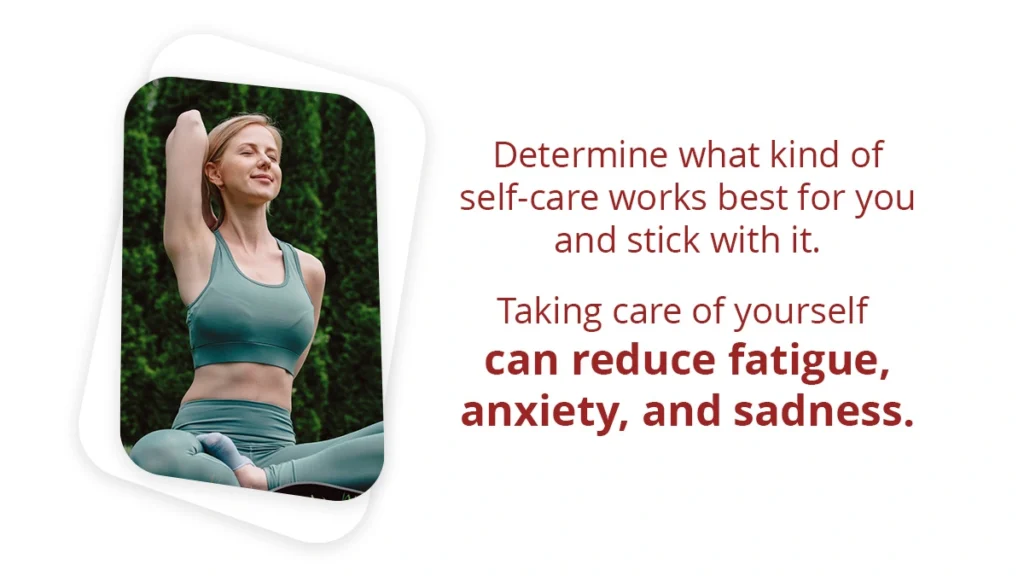
Determine what kind of self-care works best for you and stick with it. Taking care of yourself can reduce fatigue, anxiety, and sadness.
Below are some self-care tips to help you get started:
Before starting any new self-care practice, list what you hope to achieve by doing the activity. This will keep you on track so you don’t fall into your old routine of overworking, over-consuming, and overwhelming yourself.
Take breaks throughout the day. When you feel overwhelmed or like you can’t take another minute, take a five-minute break before returning to your task. This will help clear your head and give you energy later in the day.
When working hard, it is important to take a break to rest your body and mind. Life can be stressful and tiring, so take a few minutes to relax every hour or so.
Create an environment that supports self-care practices. Make sure your home is comfortable and inviting so you will want to stay there even when stressed or tired.
Have attractive plant ornaments that inspire positive thoughts and create an ambiance of relaxation and well-being. Add soft music or candles if desired.
Practicing daily meditation benefits your mental and physical health. Meditation helps reduce anxiety and stress, improves focus and concentration, boosts your immune system, and gives you peace of mind.
Exercise keeps your body healthy by helping to improve your mood, relieve stress, improve sleep quality, increase energy levels, and decrease inflammation. A good start is doing something you enjoy, such as walking or biking around town.
Getting enough sleep is another key part of self-care practices. Getting enough sleep helps to reduce stress levels and improve moods.
Additionally, getting enough sleep has been linked to better cognitive performance and overall well-being. Getting at least 7 hours of sleep per night is important to maintain optimal health.
Don’t know where to start? Here’s a list of activities you can do to show your body and mind some love:
Self-care doesn’t have to be lonely. In the United States, loneliness is widespread. Prevent your own loneliness by making time for family and friends. When you care for your community, you care for yourself.
Making important decisions about your mental and emotional health is never easy. Fortunately, you can get professional help to make the best possible decisions.
They take a functional approach that encourages engaging in important activities regularly to establish meaningful lifestyle changes.
We offer dual diagnosis treatment, cognitive behavioral therapy, EMDR, and many more ways to treat your addiction habit or also your mental health. View our facilities to find out more.
 100% Confidential